
This project is an educational reverse phone lookup tool that demonstrates how to track mobile number location and access mobile number details using public and legally available data sources.
It is designed to explain the concepts behind a mobile number tracker, how telecom regions work, and how basic phone number information can be presented safely and ethically.
Live reference tool: 👉 https://www.mobilenumbertracker.in
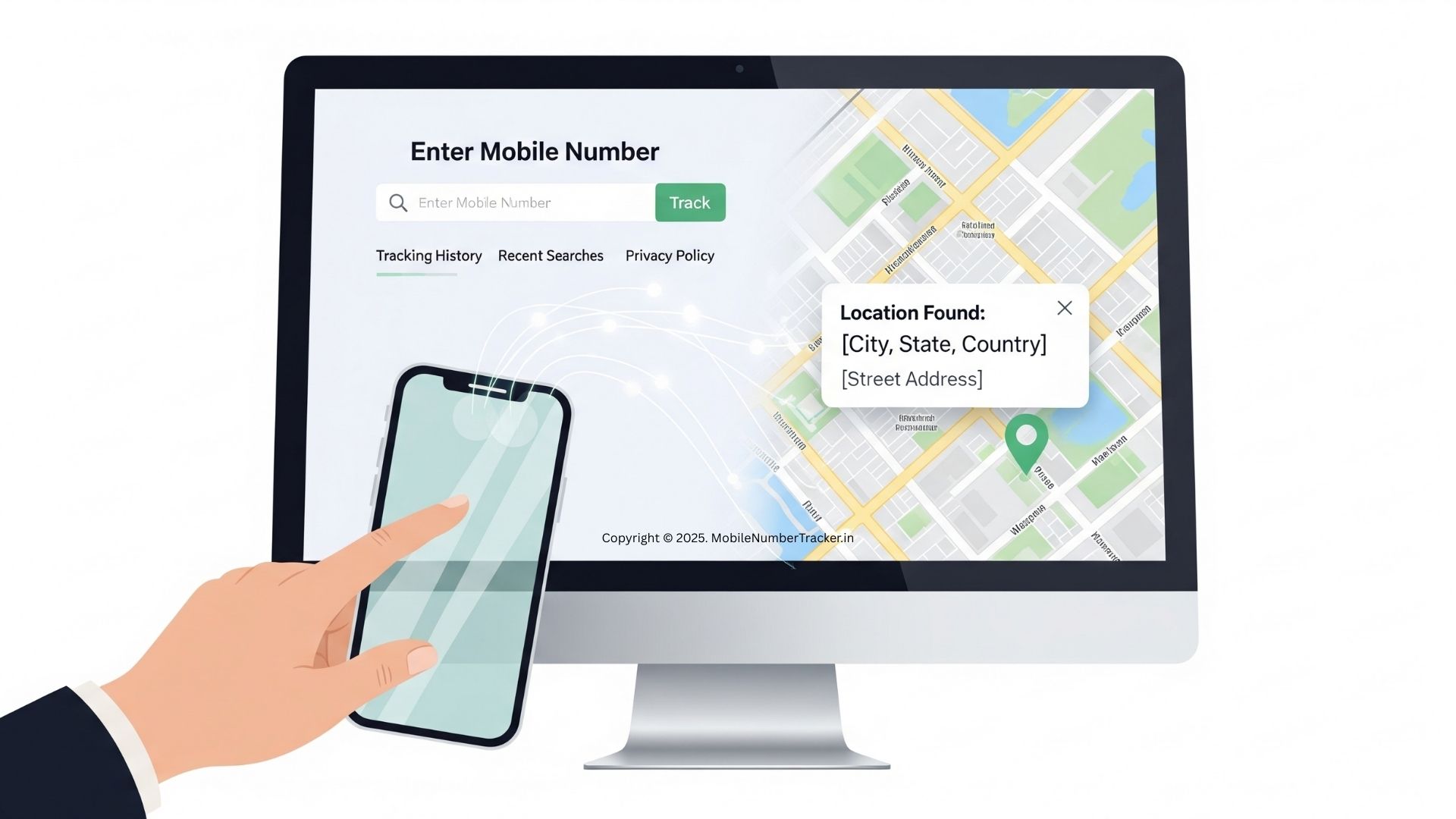
Reverse phone lookup is the process of entering a phone number to retrieve available information linked to that number, such as:
- Country
- Region or state
- Mobile network / telecom operator
- Number type (mobile / landline)
- Approximate location (non-precise)
A mobile number tracker does NOT show exact real-time GPS for random people. Instead, it uses:
- Number prefixes
- Telecom databases
- Regional mappings
- Public network data
This repository explains those concepts and demonstrates safe, open, educational examples.
This repository is created to:
✅ Demonstrate how a reverse phone lookup tool works
✅ Explain how to track mobile number location in an approximate way
✅ Show sample output for mobile number details ✅ Provide example code for learning & testing
✅ Help developers understand telecom data formatting
It is intended strictly for:
- Educational use
- Research
- Learning
- Testing
- Academic demos
It is NOT created for illegal tracking, spying, or privacy invasion.
Using a public dataset and sample logic, a typical mobile number tracker can provide:
- Country: India / USA / Other
- State or circle
- Network provider (e.g., Jio, Airtel, Verizon, AT&T)
- Number format validation
- Approximate region (not exact address)
- Sample map preview (optional, demo only)
These are standard mobile number details that are regularly used to filter spam calls or identify unknown numbers.
A typical reverse phone lookup process works like this:
- User enters a phone number
- Number is validated
- Prefix is analyzed
- Region & operator are matched
- Mobile number details are displayed
To see a real working example, visit: 👉 https://www.mobilenumbertracker.in
Click Trace Now after entering a number.
People often want to track mobile number location for:
- Identifying unknown callers
- Checking spam or fraud risk
- Verifying business numbers
- Finding a lost phone (with permission)
- Safety & awareness
When used responsibly, a mobile number tracker can be a very helpful tool.
This repository strongly promotes safe usage only.
You should only use a reverse phone lookup tool when:
✔ You have permission
✔ It is for safety or verification
✔ It complies with local laws
✔ It does not invade privacy
This project does not store user data and does not connect to private or confidential databases.
This project is for educational and demonstration purposes only.
It does NOT:
- Reveal a person’s private address
- Show real-time GPS tracking
- Provide private owner identity
- Connect to confidential telecom systems
Always follow your country’s data protection and privacy laws.
A standard mobile number tracker system may rely on:
- Prefix / numbering plan databases
- Telecom operator mappings
- Network location data (approximate)
- Public APIs (where legally allowed)
- Map libraries for visualization
This repository contains safe example files only.
reverse-phone-lookup-tool
│
├── README.md
├── example-code
│   └── demo.html
├── docs
│   └── how-reverse-lookup-works.md
├── data
│   └── sample-output.json
└── LICENSE
- Reverse phone lookup
- Track mobile number location
- Mobile number tracker
- Mobile number details
- Phone number lookup
- Unknown number search
- Telecom data
- Caller identification
If you’d like to support or improve this project:
⭐ Star the repo
🍴 Fork it
📝 Suggest improvements
💬 Open an issue
For a real working mobile number tracker and reverse phone lookup example, visit: 👉 https://www.mobilenumbertracker.in
<!DOCTYPE html>
<html>
<head>
  <title>Reverse Phone Lookup - Demo</title>
  <meta charset="UTF-8">
</head>
<body>
  <h2>Reverse Phone Lookup (Educational Demo)</h2>

  <p>This is a sample front-end for demonstrating how a reverse phone lookup system works.</p>

  <input type="text" placeholder="Enter phone number" id="phone" />
  <button onclick="lookup()">Search</button>

  <pre id="result"></pre>

  <script>
    function lookup() {
      const number = document.getElementById('phone').value;

      if (!number || number.length < 7) {
        document.getElementById('result').innerText = "Please enter a valid phone number";
        return;
      }

      // This output is hardcoded demo data and does not perform a real lookup.
      const output = {
        number: number,
        country: "India",
        region: "Sample Region",
        operator: "Sample Network",
        type: "Mobile",
        note: "This is a demo response for educational purposes only."
      };

      document.getElementById('result').innerText = JSON.stringify(output, null, 2);
    }
  </script>
</body>
</html>A reverse phone lookup system uses the structure of a phone number to understand:
- Which country it belongs to
- Which region or state
- Which telecom operator likely owns the range
It does NOT mean:
- Real-time GPS tracking
- Exact home address
- Private user identity
Instead, it reads:
- Dialing codes
- Area codes
- Known prefixes
This method is commonly used in:
- Spam prevention
- Telecommunication systems
- CRM tools
- Security & verification platforms
{
  "number": "+91XXXXXXXXXX",
  "country": "India",
  "region": "Delhi NCR",
  "operator": "Sample Network",
  "type": "Mobile",
  "status": "Demo data only"
}